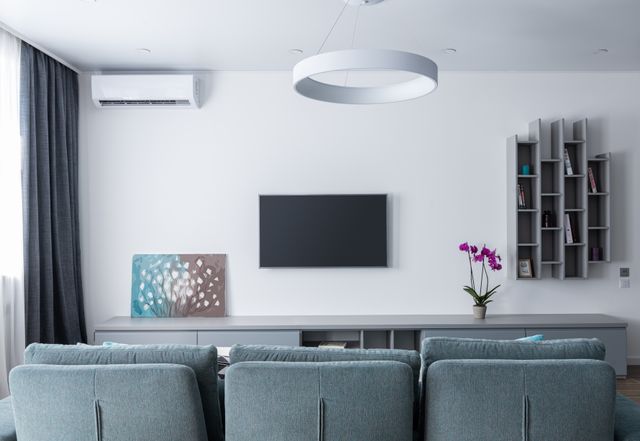

Melbourne’s weather has a knack of exposing all the weaknesses in a home’s comfort setup. You might be lounging on the couch on a northerly 38 degrees one afternoon and then suddenly reeling from a 14-degree southerly the next morning. No wonder heating and cooling systems that only do one job just can’t cut the mustard before summer even arrives. Split systems have become the default solution in Victorian homes, and that’s not because of any slick marketing campaign, but because the tech just happens to suit Melbourne’s climate better than most other alternatives.
Melbourne Sits in a Cold Climate Zone, and That Changes Everything
Melbourne is getting classified in the “Cold” zone under the ZERL (Zoned Energy Rating Label) system that’s rolling out across Australia from 2025. We’re talking right alongside Hobart and Canberra. You’ve got Brisbane and Darwin in the “Hot” zone, and Sydney and Adelaide slotted into “Average”. So what does this mean in real terms? Well, the star rating on a ZERL label is based on how a system will actually perform in your local climate, not some generic national average. A 6-star rating for cooling and a 3-star rating for heating in Melbourne’s “Cold” zone? That’s the real deal for your home’s specific conditions. Modern inverter split systems (reverse cycle) were actually designed for the exact kind of dual demand Melbourne throws at them. That’s because they use clever inverter technology, which lets the compressor speed adjust in real time, matching output to the room’s needs on the fly, rather than just switching on and off full bore. Picture it, that spring morning where the temperature creeps up from 9 to 28 degrees by lunchtime. Your system can adjust just as smoothly as that.
What the 2025 Market Actually Looks Like?
You’ve got four main players dominating the Melbourne market right now, Daikin, Mitsubishi Electric, Fujitsu, and Panasonic, and all of them have solid after-sales teams across Victoria to call on if you need them. So here’s the rule of thumb for sizing a system for a typical insulated Melbourne home, about 120 watts per square metre for cooling. A 25 square metre bedroom needs a 2.5 to 3 kW unit, while a 45 square metre open plan living area needs something closer to 5 to 6 kW. The 5 kW unit has become the most popular go-to size for Melbourne living rooms, a good balance between power and running cost. You’re looking at around $320 to $400 a year in running costs for a 5 kW system in a typical 35 square metre lounge area, based on standard Victorian tariffs. That’s roughly manageable compared to the running cost of a system that’s just not big enough and’s working flat out all day.
What Installation Actually Costs in Melbourne?
Supply and installation pricing varies way more than most people would guess. You could get a 2.5 kW unit in for $1,250 to $2,625 in a standard back-to-back installation, or the 5 kW system will cost you $1,900 to $3,675, and the 7 kW unit is $2,300 to $4,725. Those figures all boil down to the real variables at play. For homes in Fitzroy, Carlton, Brunswick, and Northcote, which are typically double brick, you can expect to add some extra core drilling costs to the bill of $150 to $250 per wall penetration. If you’ve got long refrigerant pipes, because the outdoor unit can’t just sit right behind the indoor head, that adds more to the labour and materials.
VEU Rebates and What They’re Worth
Victoria’s Victorian Energy Upgrades program is definitely worth working into any quote you get for a new install. If you’re one of the lucky homeowners who get to swap out an old gas ducted heating system for a brand new reverse cycle split system, you can look forward to rebates of $1,000 or less if it’s a straight swap, or a possible windfall of over $3,500 if you’re looking to get a gas to multi-head upgrade, all depending on the system you go for. Starting from March 2025, all VEU installed gear has to come with a minimum 5-year warranty, and the program itself is getting a nice long extension till 2045. Having an accredited VEU provider do the installation for you also means the paperwork is taken care of as part of the process. You don’t have to bother with separate applications.
Split System vs Ducted: The Honest Version
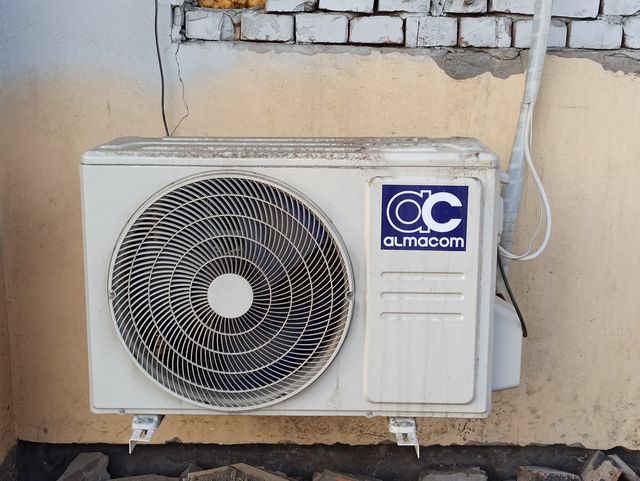
Split systems are the go-to aircon option for most Aussie households, and in a lot of cases, it’s just the easiest choice for homes in Melbourne, especially apartments, units, and smaller homes. It’s cheaper to install, cheaper to run for the rooms that need it, and the whole thing is usually done in a matter of hours rather than days. Where ducted systems might actually come out on top is in really big homes, where the reality of the day is that you need to be able to cool multiple rooms at once. Once you start running three or four split heads across a home, the energy use starts to add up and gets close to what a properly zoned ducted system uses. This does narrow the gap in terms of upfront cost. So for a big four-bedroom home where the whole house gets used all the time, ducted might give you better value in the long run. If you’re just cooling down a tiny two-bedroom apartment or need to just chill a couple of specific rooms, a split system Melbourne nails it on every level.
Choosing an Installer in Melbourne
In Victoria an ARC authorisation and an active electrical licence are just non-negotiable. Beyond making sure you’re complying, it’s worth looking for fixed-price quotes, rather than just “ballpark figures”, making sure you get a clear picture of the brand you’re going to be getting right from the get-go, and having commissioning sorted as part of the price. This gives you that crucial testing of airflow, a check on the refrigerant charge, and makes sure the whole system gets handed over properly, rather than just switching it on and leaving.